
How to Create a Running Schedule You Can Actually Stick To


Creating a running schedule is easy. Sticking to one? That's where things get difficult.
It can be tempting to map out the perfect week: running five days, strength training twice, getting a long run in every Saturday, and never missing a workout. Then real life happens. Work gets busy. You don't sleep well. The weather doesn't cooperate. You miss Tuesday's run, Thursday gets pushed back, and suddenly that perfect schedule doesn't look so perfect anymore.
A good running schedule shouldn't require your life to revolve around running.
Instead, your running schedule should fit into the life you're already living.
Here's how to create one you can actually stick to.
1. Be Realistic About How Often You Can Run
Before worrying about mileage, workouts, or pace, ask yourself one simple question:
How many days per week can I realistically run?
Not how many
days you wish you could run. How many days can you consistently make time for? For some runners, that's three days per week. For others, it's four, five, or six. There's nothing wrong with starting small. Three consistent running days every week will usually do more for you than planning six and constantly missing half of them. You can always add another running day later as your routine becomes easier to maintain.
2. Give Every Run a Purpose
You don't need every run to be fast or difficult to improve. In fact, most of them shouldn't be. A balanced running schedule might include:
Easy runs: Comfortable running that builds aerobic fitness while allowing your body to recover.
Long runs: Longer, generally easy-paced runs that build endurance.
Workouts: Tempo runs, intervals, hills, or other harder sessions designed to improve speed and fitness.
Recovery runs: Very easy running used to keep your legs moving between harder efforts.
If you're a newer runner, you may not need structured speed workouts yet. Building a consistent base of easy running can be plenty. As you become more experienced, you can gradually introduce harder sessions.
3. Build Around Your Life
This might be the most important part of creating a sustainable running schedule. Look at your week before deciding where your runs go.
If you work late every Wednesday, Wednesday probably isn't the best day for your hardest workout. If Saturday mornings are almost always free, that might be the perfect place for your long run. Your schedule doesn't need to look like someone else's. For example, a four-day running week could look like:
Monday: Easy run
Tuesday: Intervals or speed work
Wednesday: Easy run
Thursday: Cross train
Friday: Rest or strength training
Saturday: Long run
Sunday: Easy/recovery run
But there's nothing special about those exact days.
Move them around.
The goal isn't to create the prettiest training calendar. It's to create one that works with your life.
4. Make Easy Days Easy
One of the easiest ways to make a running schedule difficult to maintain is turning every run into a workout. You don't have to prove your fitness every time you run. If Tuesday is supposed to be easy, let it be easy. Slowing down gives your body a chance to recover while still building aerobic fitness. It can also leave you better prepared for your next hard workout. When every run becomes a race against yesterday's pace, running can quickly become exhausting, both physically and mentally. Save your harder efforts for the days that call for them.
5. Schedule Recovery Just Like You Schedule Running
Rest isn't what happens when training goes wrong. Rest is part of training. When creating your schedule, intentionally decide where your recovery days will go.
Try to avoid stacking several difficult sessions together. A hard workout followed immediately by another hard workout may leave you constantly fatigued and make it harder to stay consistent.
Your body improves when it has an opportunity to recover from the work you've already done. Sometimes the smartest thing you can put on your running schedule is simply:
REST.
6. Have a Backup Plan
Your schedule will eventually get interrupted which is normal. Instead of expecting every week to go perfectly, decide beforehand what you'll do when something changes.
Maybe your long run is normally Saturday morning, but you have plans this weekend. Could you run Sunday instead? Maybe you only have 30 minutes for a planned 45 minute easy run. Running for 30 minutes is still better than deciding the workout isn't worth doing at all. Flexibility doesn't mean you're abandoning your plan. It means you're finding a way to keep moving forward.
7. Don't Try to Make Up Every Missed Run
You missed Tuesday. Now what?
For many runners, the instinct is to squeeze that workout somewhere else. But this can create a domino effect. Tuesday's run gets moved to Wednesday. Wednesday's run moves to Thursday. Suddenly you're running several days in a row and your long run is still waiting for you on Saturday. Sometimes the best response to a missed run is simply to let it go.
One missed workout isn't going to destroy your fitness. Jump back into your normal schedule and keep going. Consistency is measured over weeks and months, not one Tuesday.
8. Stick to What's Actually Working
Your running schedule shouldn't be something you create once and never change.
Pay attention to how you're responding to it.
After your runs, consider tracking things like:
Distance
Time
Pace
How the run felt
Energy level
Sleep
Soreness
Notes about the workout
Over time, you'll start noticing patterns.
Maybe Thursday workouts consistently feel terrible because Wednesday is your busiest day. Maybe you're recovering better when you take Friday completely off before your Saturday long run.
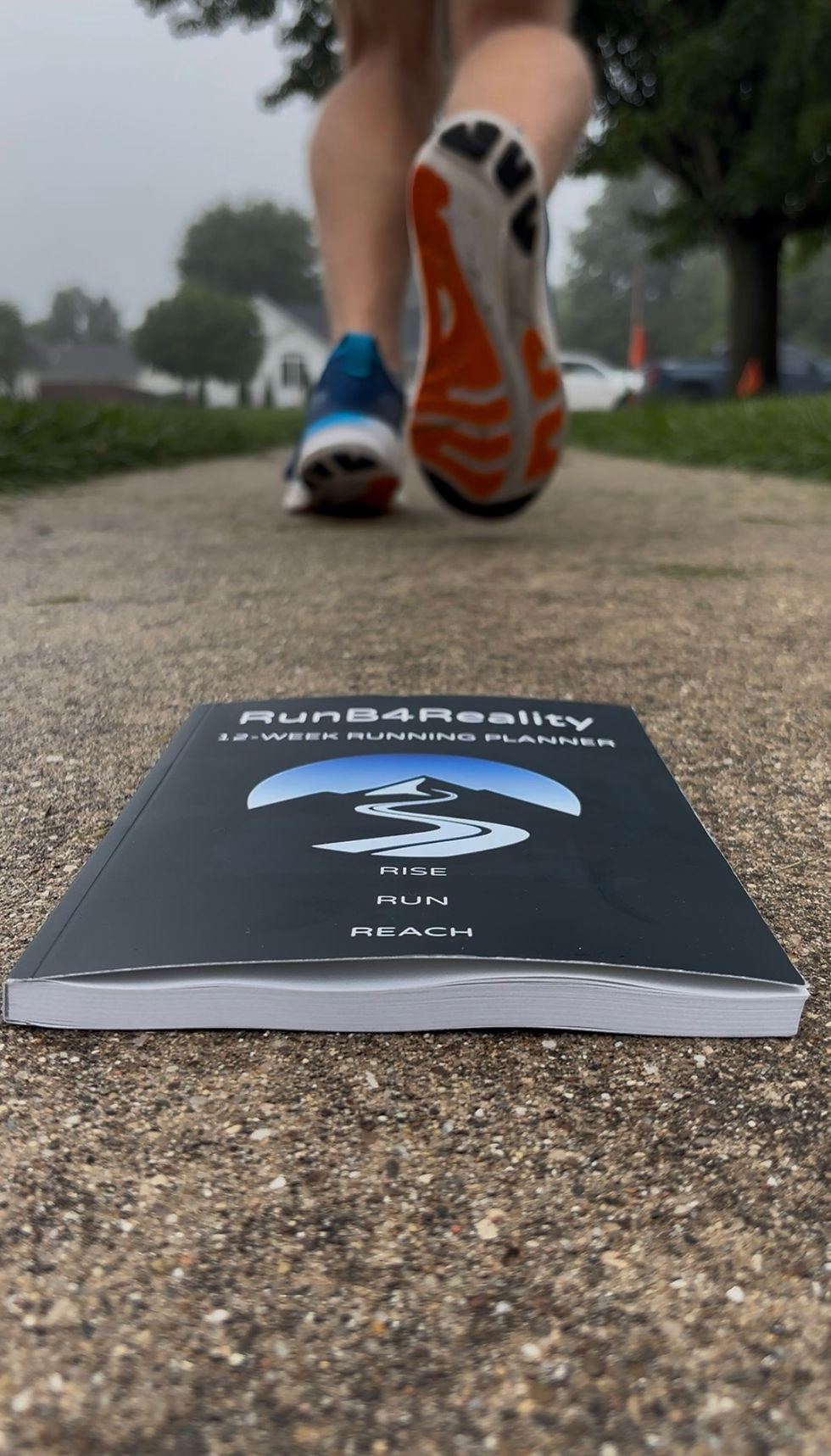
Keeping a running log or planner can help you see these patterns instead of relying entirely on memory. Your training history can help you build a better training future.
9. Adjust Before You Burn Out
There's no prize for following a training schedule exactly as written. If your body is constantly exhausted, your motivation is disappearing, or running is starting to feel like another obligation hanging over you, pay attention.
You might need an additional rest day.
You might need to reduce your mileage.
You might need a week without hard workouts.
Changing your schedule isn't failing.
A sustainable running schedule should challenge you enough to improve without demanding so much that you eventually stop enjoying running altogether.
10. Focus on Consistency, Not Perfection
You are going to miss runs.
You're going to have bad workouts.
Some weeks will go exactly according to plan. Others won't come close and that's okay. The runners who make progress aren't necessarily the runners who never miss a workout. They're the runners who keep coming back.
Don't judge your training by one bad day.
Look at the bigger picture.
If you're consistently showing up, recovering, learning from your training, and adjusting when necessary, you're moving in the right direction.
Build a Schedule for Your Reality
The best running schedule isn't necessarily the one with the most miles, the hardest workouts, or the most running days.
It's the one you can consistently follow.
Start with the life you have. Decide how much running realistically fits into it. Give your runs a purpose, protect your recovery, and leave enough flexibility for the unexpected.
Your schedule doesn't have to be perfect.
It just has to keep you running.
Run your pace. Reach your reality.


Comments